## Cyclic dependencies
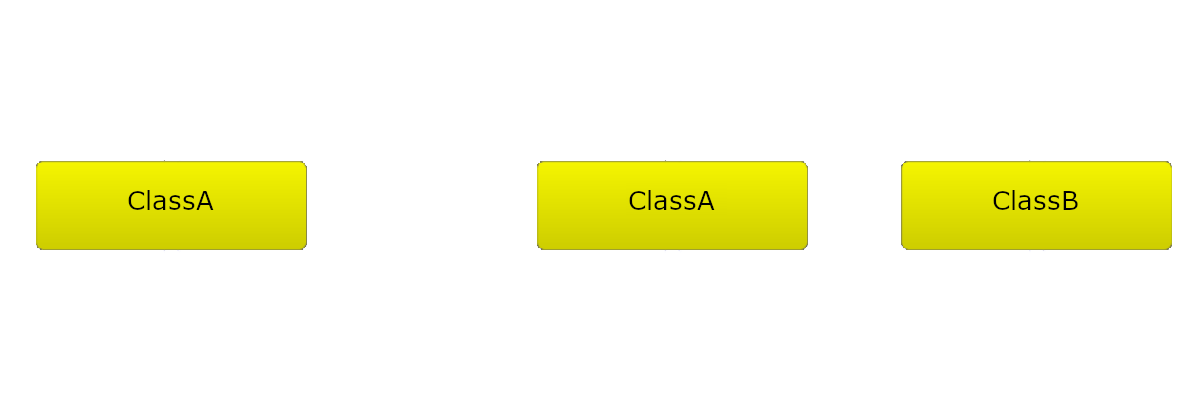
* Cyclic dependency is where you have class A with self-referencing member.
* Cyclic dependency is where you have two classes A and B where A has a reference to B which has a reference to A.
* How to fix it?
___
### `std::weak_ptr<>` to the rescue
* does not own an object
* observes only
* must be converted to std::shared_ptr<> to access the object

* can be created only from a std::shared_ptr<>
___
### `std::weak_ptr<>` usage
```cpp
#include
#include
struct Msg { int value; };
void checkMe(const std::weak_ptr & wp) {
std::shared_ptr p = wp.lock();
if (p)
std::cout << p->value << '\n';
else
std::cout << "Expired\n";
}
int main() {
auto sp = std::shared_ptr{new Msg{10}};
auto wp = std::weak_ptr{sp};
checkMe(wp);
sp.reset();
checkMe(wp);
}
```
```bash
> ./a.out
10
Expired
```
___
### `std::shared_ptr<>` cyclic dependencies
* How to solve this problem?
```cpp
#include
struct Node {
std::shared_ptr child;
std::shared_ptr parent;
};
int main () {
auto root = std::shared_ptr(new Node);
auto child = std::shared_ptr(new Node);
root->child = child;
child->parent = root;
}
```
___
### Breaking cycle - solution
* Use `std::weak_ptr` in one direction
```cpp
#include
struct Node {
std::shared_ptr child;
std::weak_ptr parent;
};
int main () {
auto root = std::shared_ptr(new Node);
auto child = std::shared_ptr(new Node);
root->child = child;
child->parent = root;
}
```
==148== All heap blocks were freed -- no leaks are possible
___
### `std::weak_ptr<>` real life usage (1)
```C++
struct Image {
/* data */
};
class Screen;
class Downloader {
public:
void downloadImage(const std::string& url, std::function callback, std::weak_ptr weak_ptr) {
std::cout << "Start downloading!" << std::endl;
std::thread(&Downloader::download, this, url, callback, weak_ptr).detach();
}
private:
void download(const std::string& url, std::function callback, std::weak_ptr weak_ptr) {
// Simulate download process
std::cout << "Download in progress!" << std::endl;
std::this_thread::sleep_for(std::chrono::seconds(3));
std::cout << "Download Finished!" << std::endl;
if (auto lock = weak_ptr.lock()) {
callback(Image{});
} else {
std::cout << "Screen object expired!\n";
}
}
};
class Screen : public std::enable_shared_from_this {
public:
Screen(Downloader* downloader)
: downloader_(downloader) {}
void printImage(const std::string& url) {
std::cout << "Waiting for image download!" << std::endl;
downloader_->downloadImage(
url, [&](Image image) { onImageDownloaded(std::move(image)); }, weak_from_this());
}
private:
void onImageDownloaded(Image&& image) {
// Do some action on image
std::cout << "Got Image!\n";
}
Downloader* downloader_;
};
int main() {
auto downloader = std::make_unique();
auto screen = std::make_shared(downloader.get());
screen->printImage("www.image.com/sth/special.img");
std::this_thread::sleep_for(std::chrono::seconds(2));
screen = nullptr;
std::this_thread::sleep_for(std::chrono::seconds(2));
}
```
___
### `std::weak_ptr<>` real life usage (2)
Output:
```Bash
Waiting for image download!
Start downloading!
Download in progress!
Download Finished!
Screen object expired!
```
When we delete line screen = nullptr;
```Bash
Waiting for image download!
Start downloading!
Download in progress!
Download Finished!
Got Image!
```
___
### `std::weak_ptr<>` real life usage (3)
Use std::weak_ptr when:
* Need to observe a lifetime of the object, without having an ownership
* Want to break cyclic dependencies